

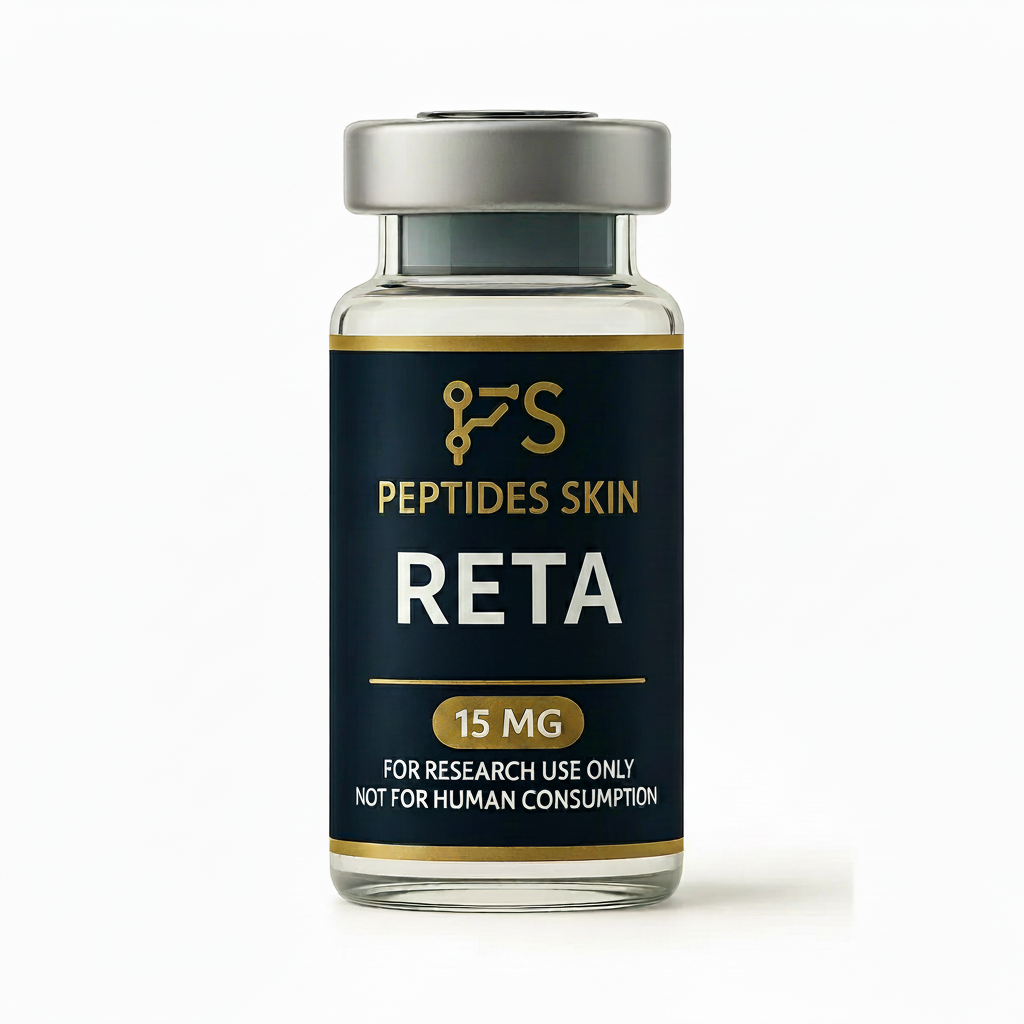


Reta Peptide, Research Grade Triple Agonist (GIP / GLP-1 / Glucagon), ≥99% HPLC Purity
If you're looking to buy Reta peptide (also known as RETA research peptide or LY3437943), you're dealing with an advanced 39-amino acid synthetic compound. It functions as a triple receptor agonist, targeting GIP, GLP-1, and Glucagon receptors. Right now, it's one of the most in-demand compounds for metabolic and body composition research. We supply this reference standard directly from the USA for labs focused on energy expenditure and lipid metabolism models.
Available Strengths
Our most common protocol targets are reta 10mg, reta 20mg, and reta 30mg. Just pick the exact concentration that fits your lab's active documentation requirements.
Product Details
- Weight: 0.02 lbs
- Dimensions: 1.5 × 2.75 × 1 in
- Format: Lyophilized White Powder (Sealed Sterile Vial)
- Strengths: 10 mg / 15 mg / 20 mg / 30 mg
Shipping & Logistics
Shipping Destination: USA only (We keep our stock in sub-zero cold-chain archives until dispatch).
- Economy Shipping: $9.99 — estimated delivery 5–8 business days
- Standard Shipping: $18.99 — estimated delivery 3–4 business days

What Is Reta? Structural Blueprint & Acylation
You'll often see people asking “what is reta” in research circles. Basically, it's a synthetic peptide made of 39 amino acids. The core sequence comes from the GIP backbone, but it's modified to also trigger glucagon and GLP-1 receptors. The biggest structural change is the addition of a C20 fatty diacid moiety. This helps it bind to albumin in lab models, protecting the peptide from breaking down too fast and giving it a half-life of roughly 6 days. For a deeper dive, check out our guide: Reta Peptide: Structure, Classification & Research Overview.
Reta Mechanism of Action & Potency
Reta's mechanism of action relies on a unique "Triple Synergy" effect. Unlike older, single-target compounds, it has a very specific hierarchy when hitting its targets:
- Strong GIP Affinity: Drives lipid buffering and cellular homeostasis.
- Moderate GLP-1 Activation: Mapped mostly for satiety-related pathways.
- Balanced Glucagon Activity: Tuned specifically to increase energy expenditure without causing rapid hyperglycemia.
For more on its chemical category, see: Is Reta a Steroid? Structural Classification & Mechanism of Action.
Comparing Reta vs. Competitors
Comparing reta vs tirz or sema is standard practice in modern metabolic studies. Having a true triple-agonist lets researchers track energy intake and lipid levels at the same time—something mono or dual agonists just can't do. You can read more about this in our breakdown: Reta vs Tirz — Key Research Differences.
Comparative Efficacy Profile Matrix:
| Research Focus | Reta (Triple Agonist) | Tirz (Dual Agonist) | Sema (Mono Agonist) |
|---|---|---|---|
| Mechanism Target | GIP / GLP-1 / Glucagon | GIP / GLP-1 | GLP-1 |
| Body Composition (High Dose)* | ~24% – 29% (Model Reduction) | ~21% | ~15% |
| Lipid Metabolism Impact* | Advanced (Triple Synergy) | Moderate | Low |
| Primary Signaling Focus | Energy expenditure & Appetite | Appetite mapping | Appetite mapping |
*Data sourced from recent peer-reviewed Phase 2/3 clinical trial registries for comparative evaluation only.
Product Specifications
| Product Name | Reta (Research Grade) |
|---|---|
| Label / Chemical Identifier | RETA / LY3437943 |
| CAS Number | 2381089-83-2 |
| Molecular Formula | C221H342N46O68 |
| Molecular Weight | ~4731 g/mol |
| Target Receptors | GIP / GLP-1 / Glucagon (GCG) |
| Purity Level | ≥99% (HPLC verified; per lot CoA) |
| Solubility Profile | Soluble in sterile water or bacteriostatic water |
| Endotoxin Level | < 1.0 EU/mg |
Quality Control & Lot Documentation (CoA)
Every single batch we produce comes with a detailed Certificate of Analysis (CoA) so you have strict lot traceability. We verify purity through high-absorbance HPLC and authenticate the structure using mass spectrometry. This keeps data integrity tight and removes guesswork from your lab workflows. Need sourcing tips? Read: Where to Buy Reta for Research Purposes.
Preparation & Reconstitution Protocol
Before starting your assay, figure out your exact dilution volume using the standard concentration formula:
V = m / C
Where V is your required solvent volume (mL), m is the total peptide mass in the vial (mg), and C is your target concentration (mg/mL).
- Lyophilized storage: Keep it in deep freeze at −20°C (or as stated on your CoA) for long-term storage.
- Reconstituted solutions: Use premium bacteriostatic water to keep the solution stable. Store it at 2°C to 8°C and keep it away from heat and light.
- Avoid: Don't shake it aggressively or run it through multiple freeze-thaw cycles. Drip the solvent slowly down the side of the vial so you don't shear the peptide sequence.
Frequently Asked Questions (FAQ)
What exactly is reta peptide?
Reta peptide is an investigational 39-amino acid synthetic peptide used to study triple-agonist receptor signaling (GIP/GLP-1/Glucagon). You'll usually see it in literature under the names RETA or LY3437943.
Why do you need mass spectrometry for Reta?
HPLC only tells you the relative purity. Independent mass spectrometry is mandatory because it confirms the exact molecular mass (~4731 g/mol) and proves that the critical C20 fatty acid side chain is actually attached.
Is Reta FDA approved?
No, it isn't. Reta is not FDA approved. We sell it strictly as a research-use-only (RUO) compound for laboratory trials.
Is Reta considered a steroid?
Not at all. Reta is a synthetic peptide polymer made of amino acids; it has no steroid ring structure whatsoever.
What's the main difference between Reta and Tirz?
The operational difference is their targets. Reta uses a triple-hormone co-activation mechanism (GIP / GLP-1 / Glucagon). Tirz is just a dual agonist, hitting only GIP and GLP-1.
How does Reta balance out the Glucagon signaling?
The peptide sequence is tuned so the high insulin-triggering actions from GIP and GLP-1 balance out the glucagon signaling. This keeps it from causing hyperglycemia in test models.