
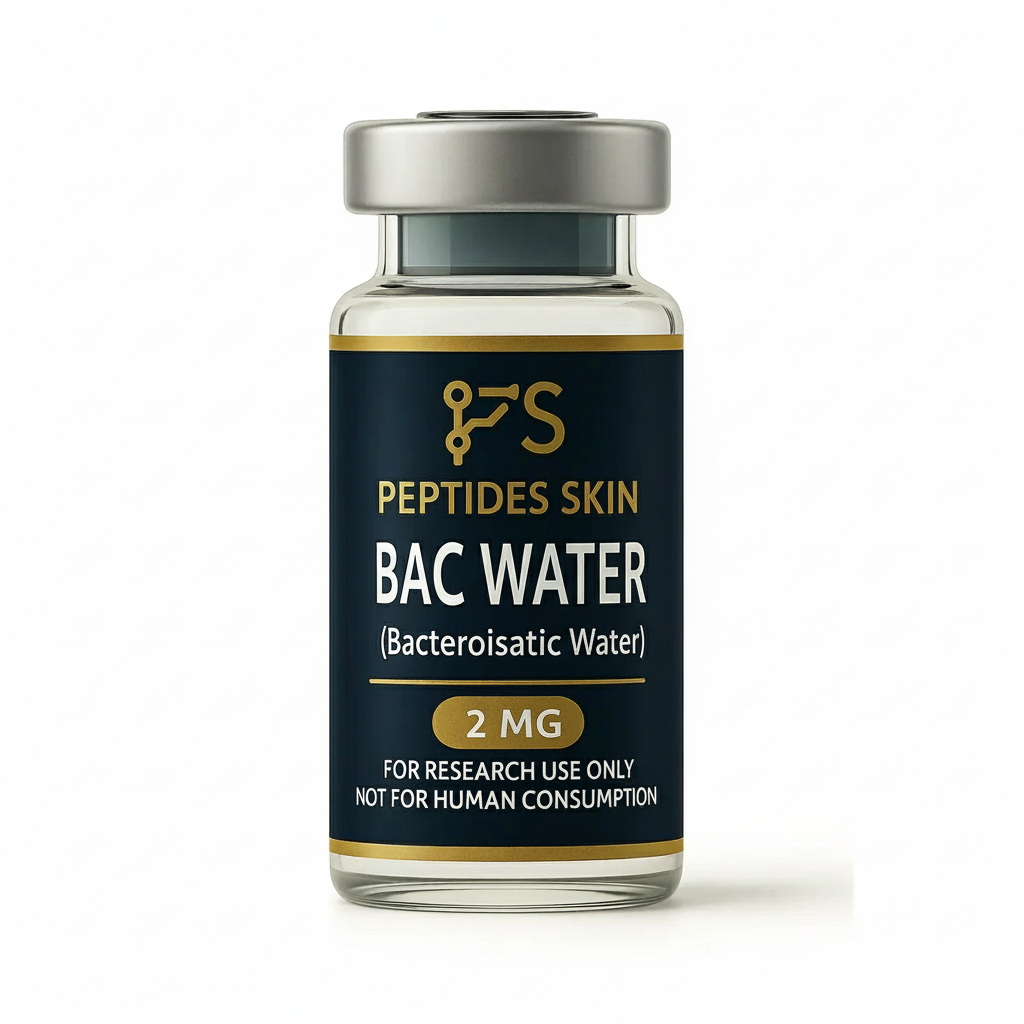


BAC Water for Reconstitution (Research Grade 2ml / 3ml / 10ml)
$7.00 USD
Research Use Only (RUO) • Not for Human or Veterinary Use • Not for Consumption
BAC Water • Bacteriostatic Water • Benzyl Alcohol Diluent • Documentation Available
BAC Water • Bacteriostatic Water • Benzyl Alcohol Diluent • Documentation Available
BAC Water (Bacteriostatic Water) is a sterile, non-pyrogenic diluent commonly referenced in laboratory workflows as bacteriostatic water and, in pharmaceutical labeling, as bacteriostatic water for injection. It is a water-based solution that contains benzyl alcohol as a bacteriostatic preservative (often described as 0.9% / 9 mg/mL where stated on label or documentation) and is typically supplied in a multi-dose vial format designed for repeated withdrawals using controlled sterile technique.
This product is supplied strictly as a research chemical / laboratory reagent for in-vitro and non-clinical laboratory research. It is not a pharmaceutical drug and is not intended for human or veterinary use, diagnosis, or treatment.
BAC Water (Bacteriostatic Water) – Research Diluent Overview
In research contexts, BAC water is valued as a controlled laboratory diluent for workflows that involve RUO materials and solution preparation under SOP. Search terms commonly associated with this product include bac water, bacteriostatic water, bacteriostatic water for injection, benzyl alcohol bacteriostatic preservative, and multi-dose diluent vial.
Main Features – Sterile Non-Pyrogenic Diluent with Benzyl Alcohol Preservative
- Sterile, non-pyrogenic diluent suitable for controlled research workflows (where stated on label/documentation)
- Benzyl alcohol preservative (commonly described as 0.9% / 9 mg/mL where stated on label or CoA/SDS)
- Multi-dose vial format designed for repeated withdrawals using appropriate sterile technique
- Clear, colorless solution for laboratory handling and visual inspection
- Documentation availability (e.g., SDS / lot information), depending on batch and format
Typical Laboratory Applications (RUO) – Peptide Research & Solution Preparation
In non-clinical research environments, bacteriostatic water is commonly referenced as a diluent for lyophilized peptide research workflows and general laboratory preparation tasks where controlled vial access is required. Common research-intent keywords include bacteriostatic water for peptides, bac water diluent, lyophilized peptide reconstitution, and research assay working solutions.
- Reconstitution of lyophilized peptides in research settings (per protocol and SOP)
- Preparation of short-term working solutions for lab assays and analytical workflows
- Protocols requiring controlled access to a multi-dose vial under sterile technique
- General research diluent use for RUO materials aligned with institutional SOP
Quality & Documentation – SDS, Lot Information, Label Verification
For consistent laboratory workflows, verify your vial’s label and any provided documentation (e.g., SDS, lot information) for key details such as preservative concentration, container type (multi-dose), and storage conditions. Pharmaceutical labeling commonly describes bacteriostatic water as sterile, non-pyrogenic water containing benzyl alcohol as a preservative and supplied in a multi-dose container; always treat the manufacturer label and documentation as the primary reference for the specific vial in your possession.
Storage & Handling – Research Context Guidelines (Follow Label + SOP)
- Store according to the product label. Many labeled products specify controlled room temperature (20–25°C).
- Use appropriate sterile technique to reduce contamination risk during vial access.
- Date the vial when first accessed and follow your lab SOP for beyond-use dating.
- As a widely used healthcare guideline for opened multi-dose vials, vials are commonly dated and discarded within 28 days after first puncture unless the manufacturer states a different timeframe. Always follow the manufacturer’s instructions for your specific vial.
- Discard if the solution becomes cloudy, discolored, or if particulate matter is present.
FAQs – BAC Water (Bacteriostatic Water) High-Search Questions
What is BAC water?
BAC water is another name for bacteriostatic water—a sterile water-based diluent that contains benzyl alcohol to inhibit bacterial growth in multi-dose containers. This product is supplied strictly for RUO laboratory research.
What is bacteriostatic water for injection?
Bacteriostatic Water for Injection is a common pharmaceutical label term for bacteriostatic water supplied in a multi-dose container, typically with benzyl alcohol as a preservative. Our product is supplied strictly as Research Use Only (RUO) and is not intended for human or veterinary use.
What is bacteriostatic water used for in peptide research?
In research workflows, bacteriostatic water is commonly referenced as a diluent for lyophilized peptides and other RUO materials to support controlled laboratory preparation of solutions (per protocol and lab SOP).
How long is BAC water good for after opening?
A common guideline for opened multi-dose vials is to date the vial when first accessed and discard within 28 days unless the manufacturer states another timeframe. Always follow the instructions on your specific vial label and your laboratory SOP.
Does BAC water need to be refrigerated?
Follow the storage conditions on your vial label. Many labeled products specify storage at controlled room temperature (20–25°C). Your lab may apply additional SOP controls based on workflow and contamination risk, but the label is the primary reference.
BAC water vs sterile water: what’s the difference?
Bacteriostatic water contains a preservative (benzyl alcohol) and is commonly supplied in multi-dose containers. Sterile water typically contains no bacteriostat or antimicrobial agent and is commonly supplied as single-dose. For RUO laboratory workflows, select the diluent that matches your protocol requirements and product labeling.
IMPORTANT RESEARCH-ONLY DISCLAIMER (RUO):
This product is intended strictly for scientific research and in-vitro laboratory use only. Not for human consumption, medical treatment, diagnostic purposes, or veterinary use. Always follow manufacturer labeling and your laboratory SOP.
This product is intended strictly for scientific research and in-vitro laboratory use only. Not for human consumption, medical treatment, diagnostic purposes, or veterinary use. Always follow manufacturer labeling and your laboratory SOP.
Request Certificate of Analysis (COA)
Every request is reviewed manually. Our team will check your customer and order information before emailing an applicable COA to the email associated with your order. No COA is sent automatically.